
Logo

  • About
  • Contact
  • News
    • English
    • עברית
  • Urbanism
    • Beer Sheva Craft District
    • Tabenkin Bat-Yam
    • Salame Sha’arei Teshuva
    • Public Realm Framework analysis
    • Mazkeret Batya Station Quarter
    • Urban proposal – Jaffa Margins
    • Rishon LeZion promanade
    • Education compound competition
    • Urban Shade Holon
    • conTEMPORARY Plovdiv, Bulgaria
    • Eco Dune, China
    • eco – agro educational center
    • harova – urban regeneration
    • Recycling in the city
    • the REAL estate
    • Haifa urban renewal
  • Architecture
    • Kamada Pharmaceuticals
    • Kfar Yona young/adult center
    • Beker 4- retail and office building
    • Affordable housing Rishon LeZion
    • Ness Ziona Mixed Uses complex
    • Daliyat al-Karmel Council Building
    • Ibn Gabirol 86-92 Tel-Aviv
    • Pika 4-6
    • rova habiluim – strip mall
    • Sustainable bridge Hiriya
    • Givat-Brener Logistic Center
    • eco-lodge in the negev
    • Farmers market Los Angeles
  • Interiors
    • School entrance Ashdod D
    • M-21 Learning Spaces
    • Iban Ezra remodel
    • MCRC cancer resource center
    • Ben Avigdor Lofts
    • Avix offices HUB
    • Gilmore Bank
  • Research
    • Time Based Architecture
    • Flexible Urbanism
    • Story map Nahalat Yitzhak
    • Neighbor notification – new generation
    • Los Angeles H* Urban Bureau
    • LA Civic Park Proposals
    • Ha’Neviim Bat-Yam
    • Montefiore Neighborhood
  • Accessibility Statement
  • facebook
  • instagram
  • pinterest
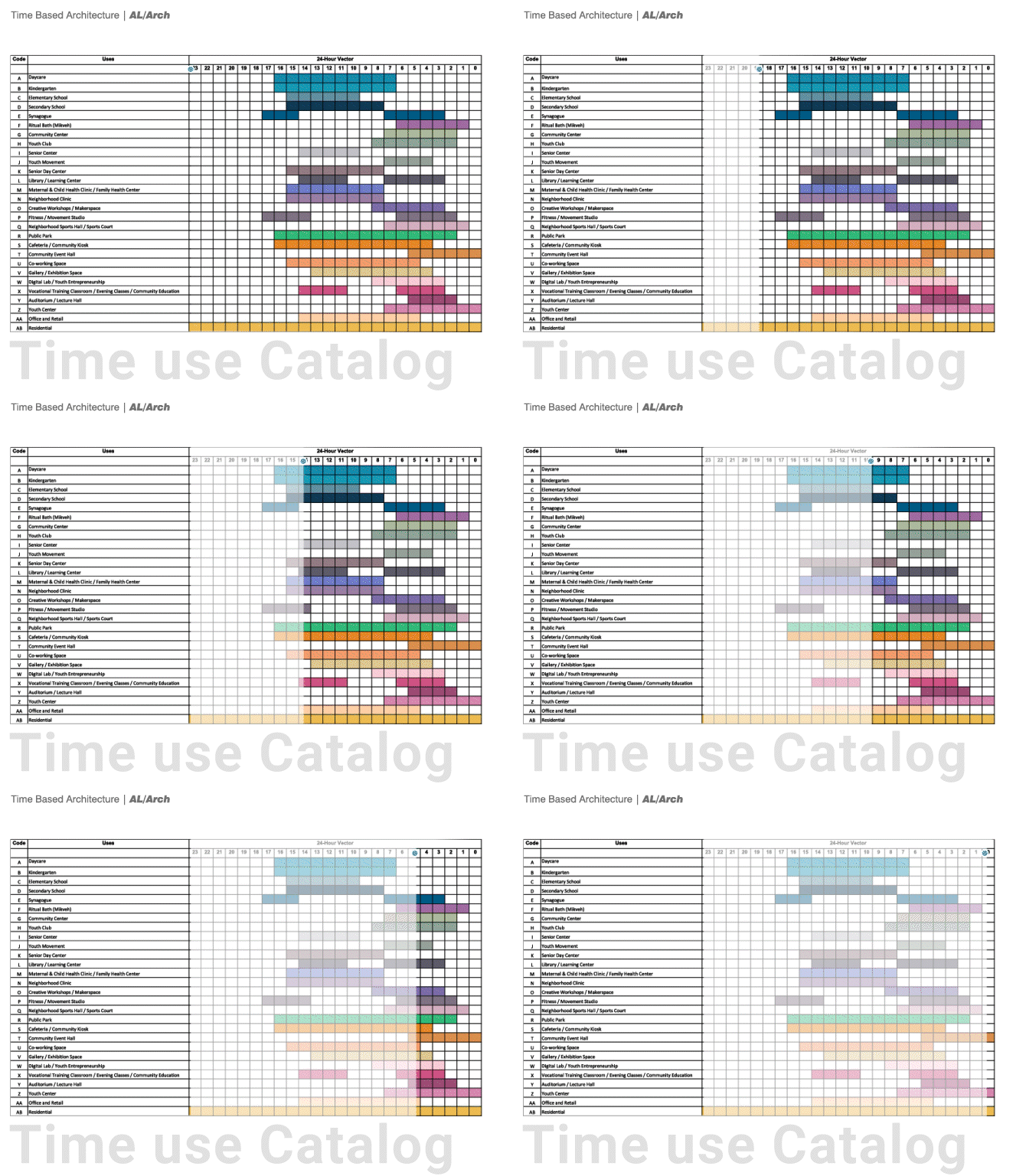
  • 28 Uses Catalog

  • Public Block at Tabenkin Bat-Yam

  • Dynamic Plan Tabenkin Bat-Yam

  • Urban Analysis of Districts 5+6 Tel Aviv

  • One plan in diiferent times at Kfar Yona Young Adult Center

  • TIme Based Planning Engine

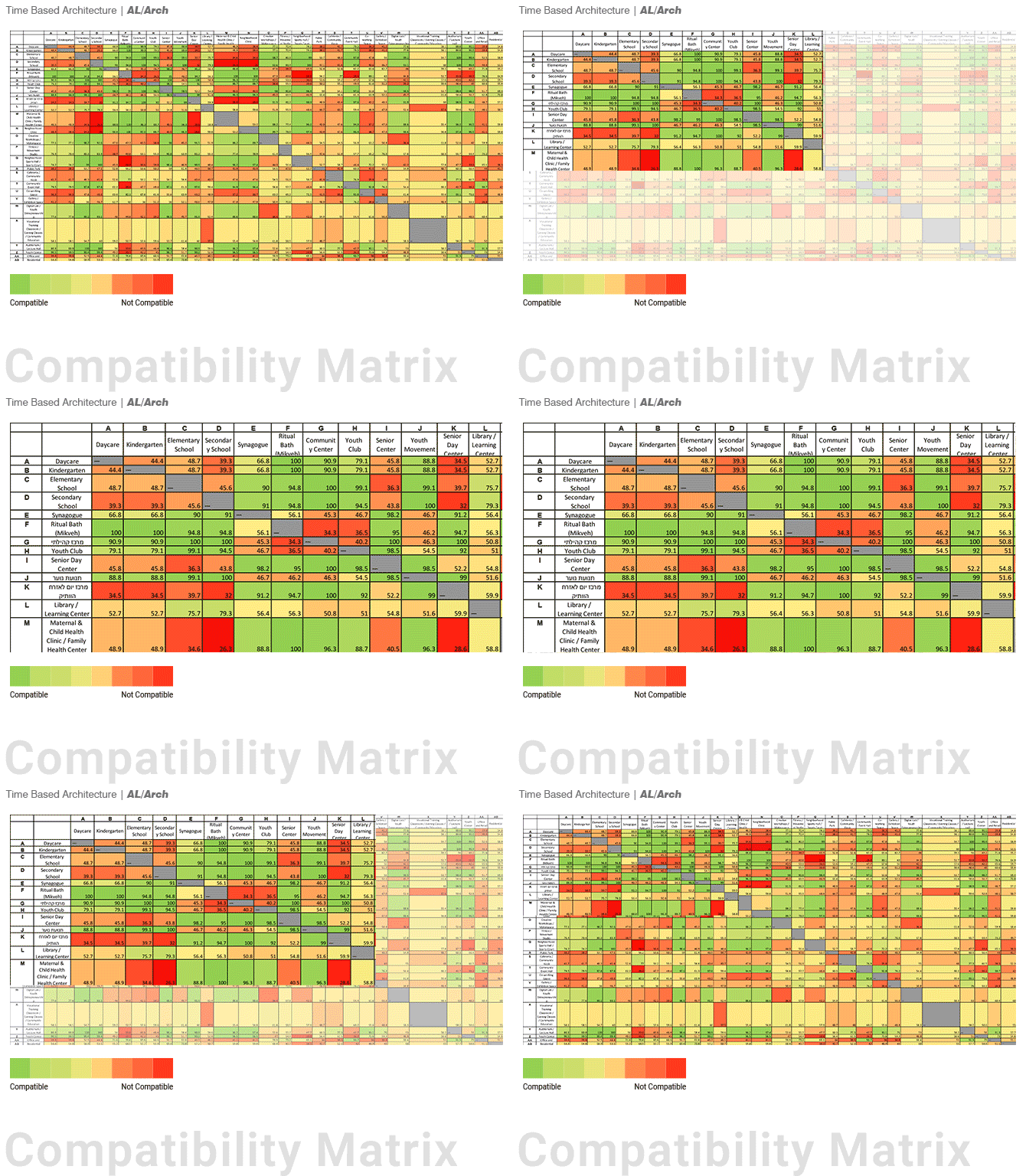
  • 28 Public uses Compatibility Matrix

Time Based Architecture

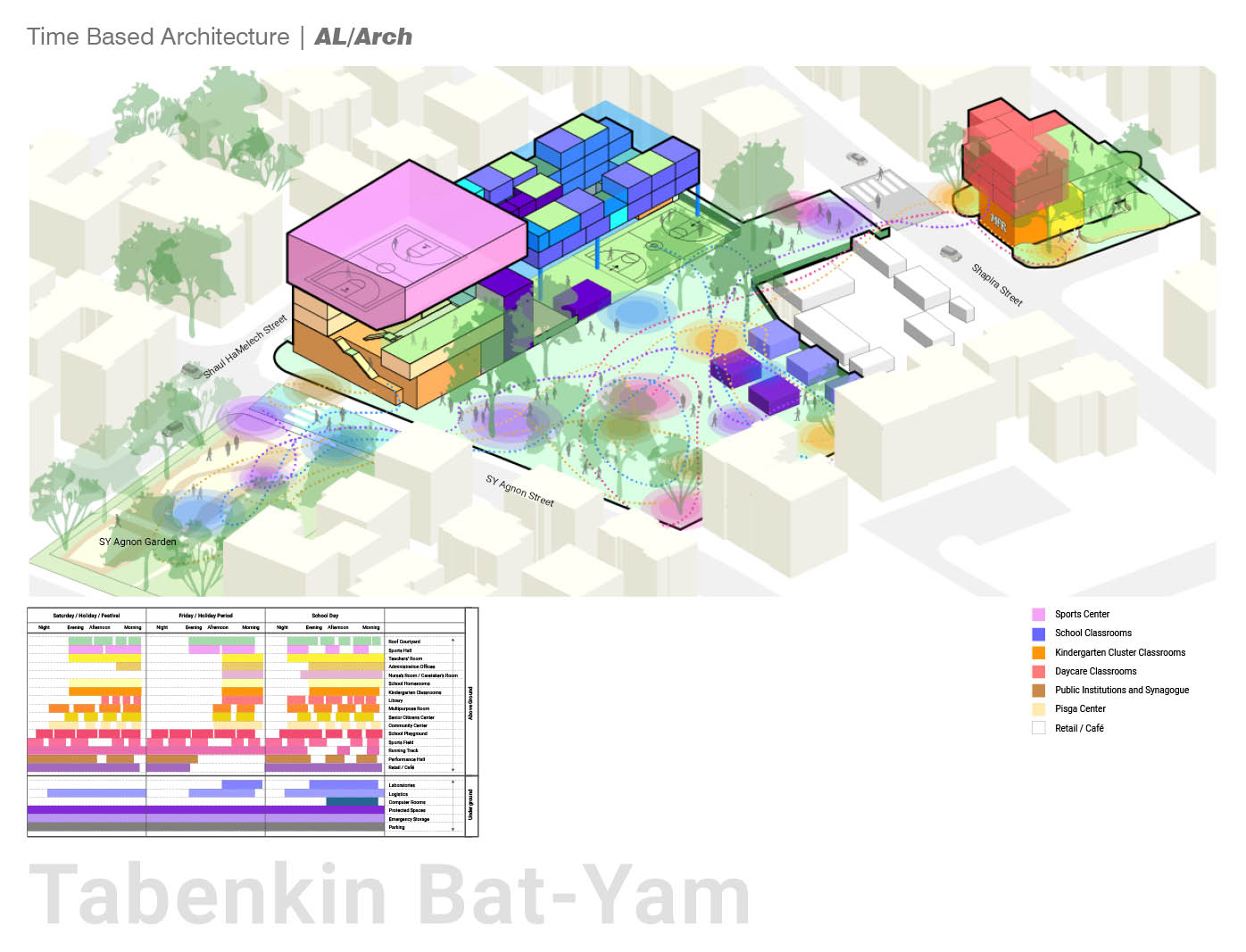
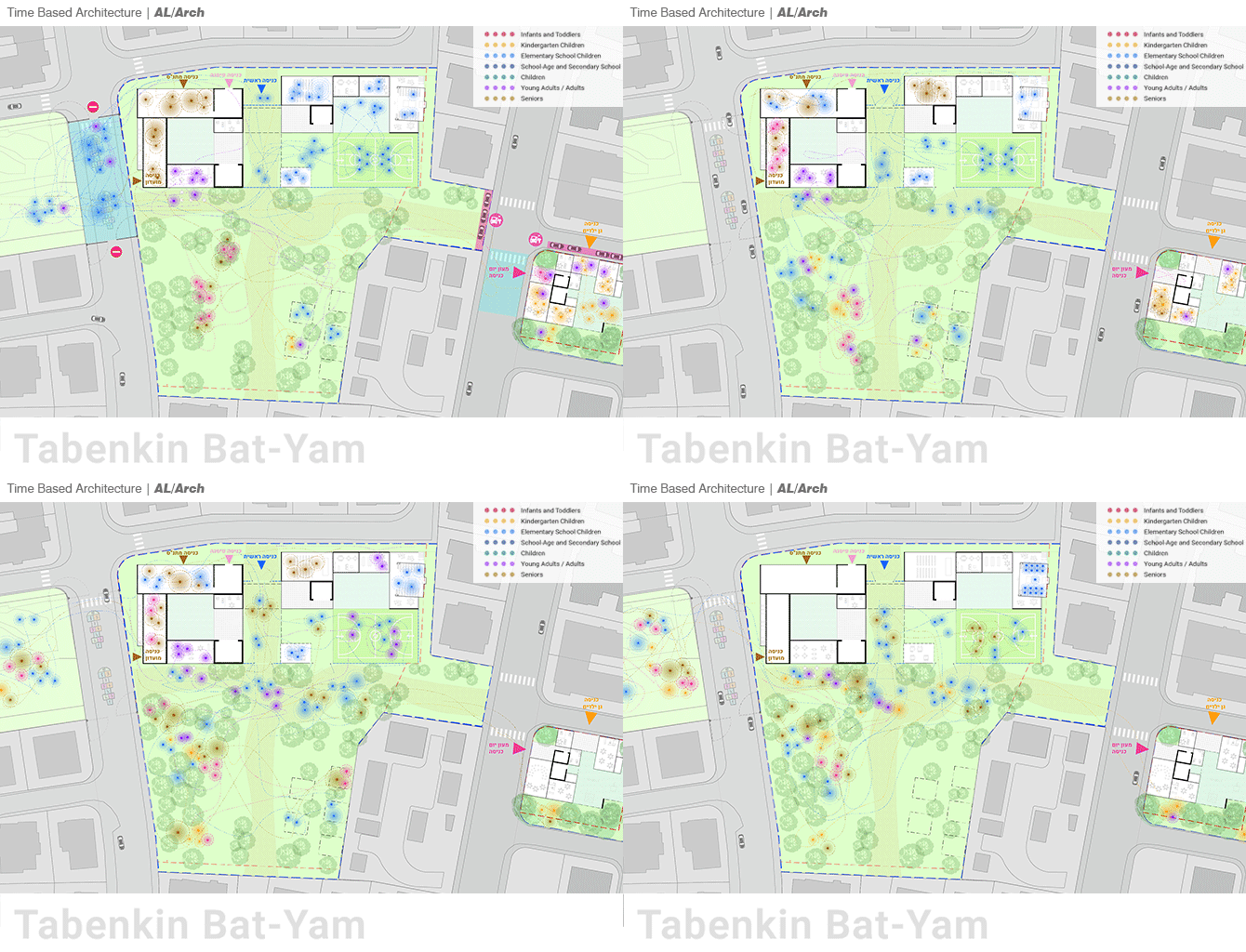
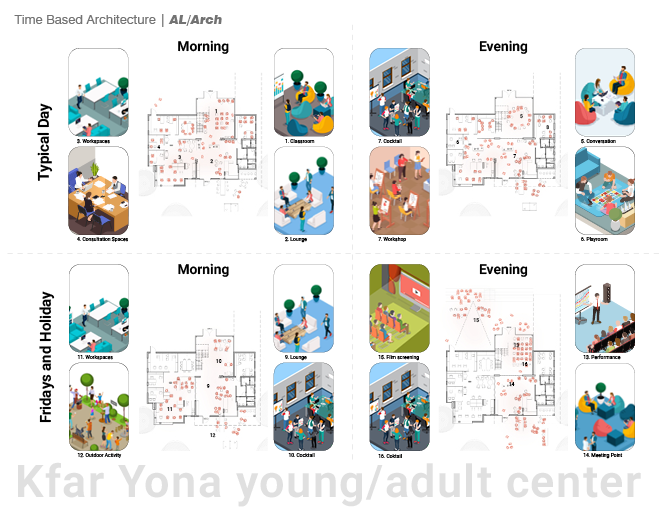
Time-based Architecture is a framework that treats time as a central element of spatial design. Rather than planning a single static state, this approach treats urban spaces as a dynamic system that functions differently throughout the day, the week, and the seasons.

The goal is to maximize the use of built and open spaces through the temporal combination of complementary uses. It does so through flexible, modular design and multifunctional spaces that can adapt to changing user needs over time.

The planning is based on interdisciplinary teamwork and the integration of management and operational factors from the initial phases of program development, with the goal of creating alignment between physical planning and actual use.

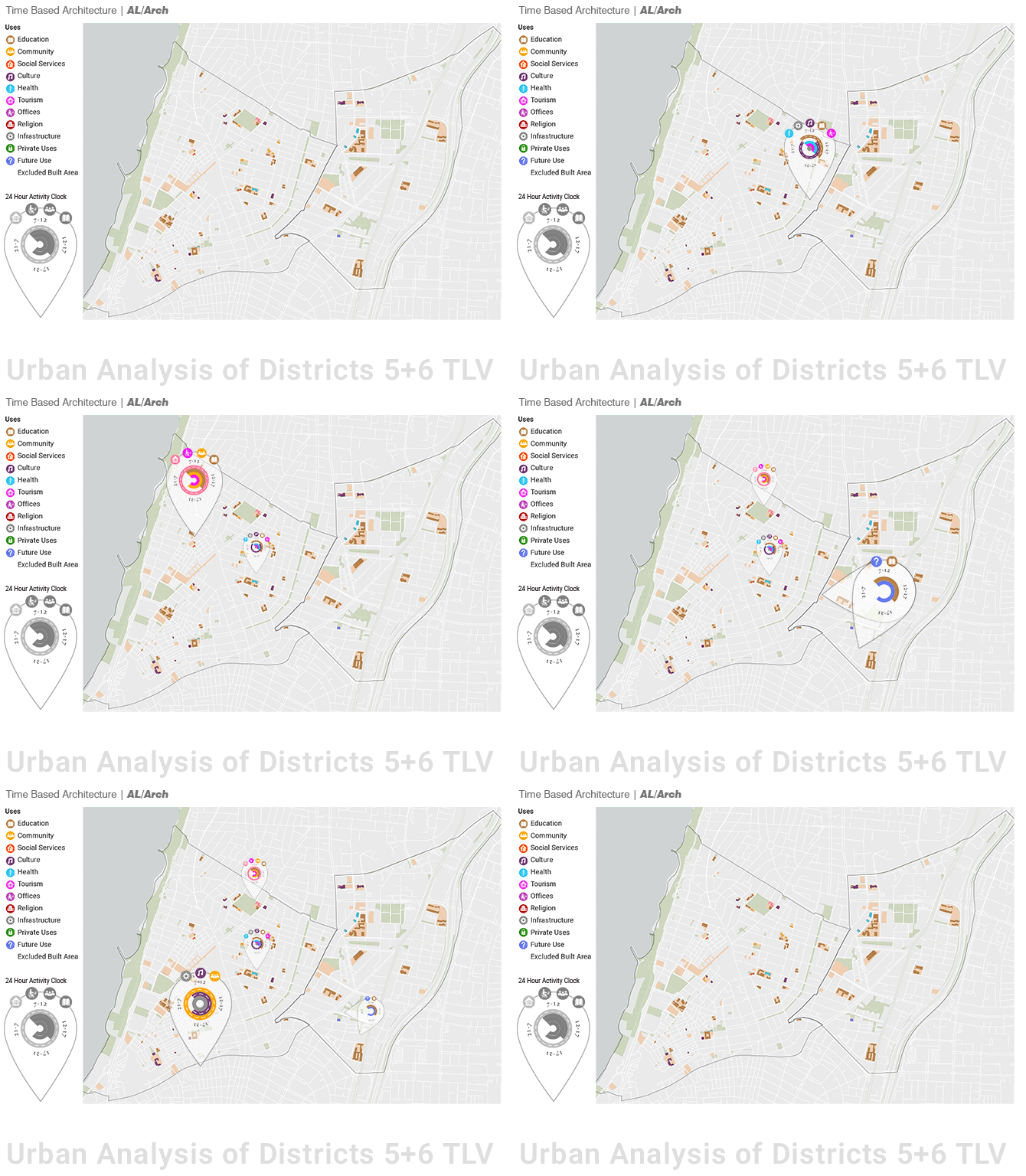
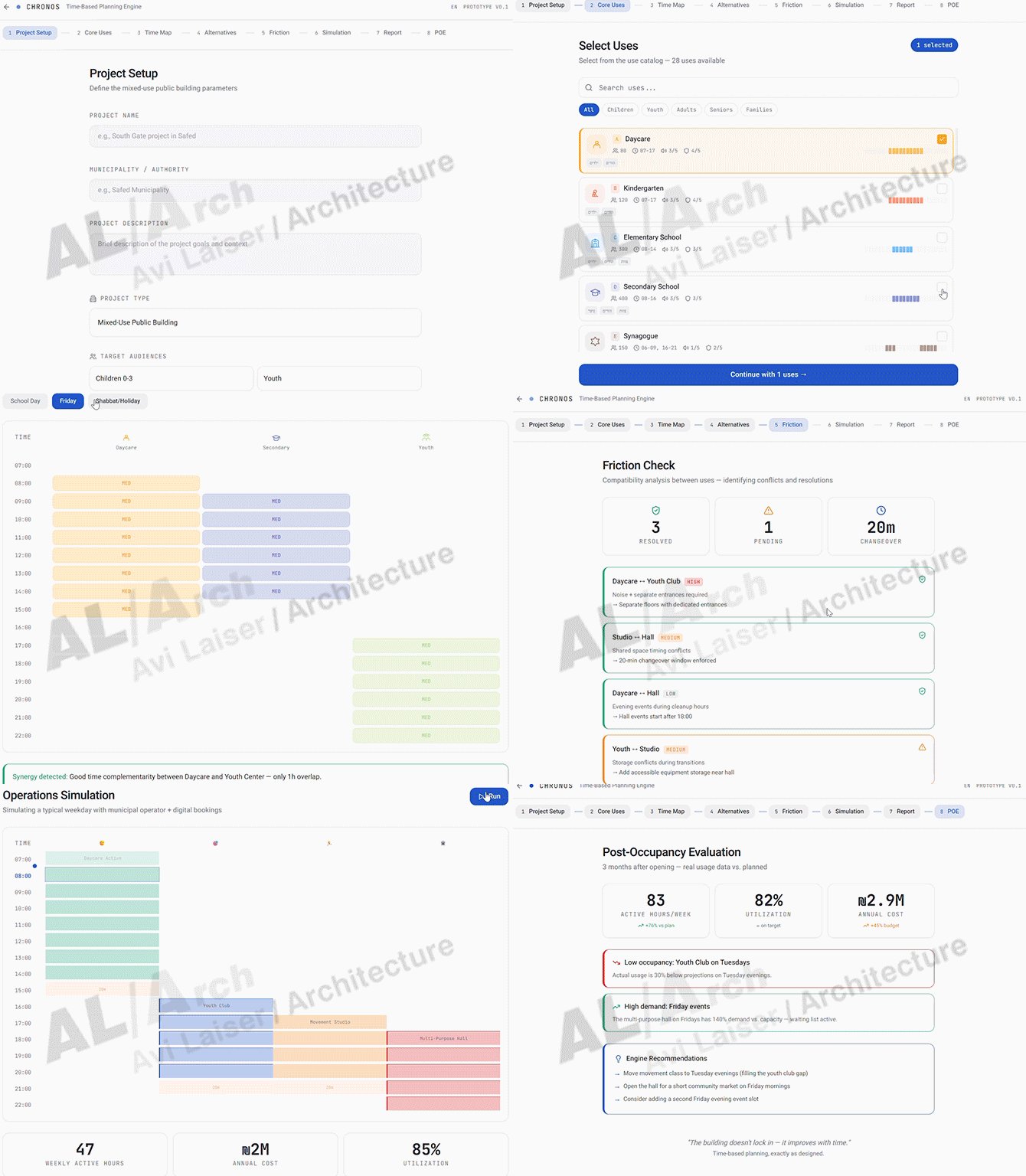
In addition, information systems and digital tools enable the mapping of buildings and spaces, the analysis of operating hours and occupancy rates, as well as the identification of gaps between current use and long-term usage potential. This analysis makes it possible to incorporate complementary uses into the planning process and create a flexible urban system that responds to changing needs. Further explanation on Time based planning methodology.